The Nguni is a cattle breed indigenous to Southern Africa, with ancestors arriving on the continent approximately 8,000 years ago. A hybrid of Bos indicus and Bos taurus, the Nguni was shaped by natural selection in Africa’s most challenging environments.
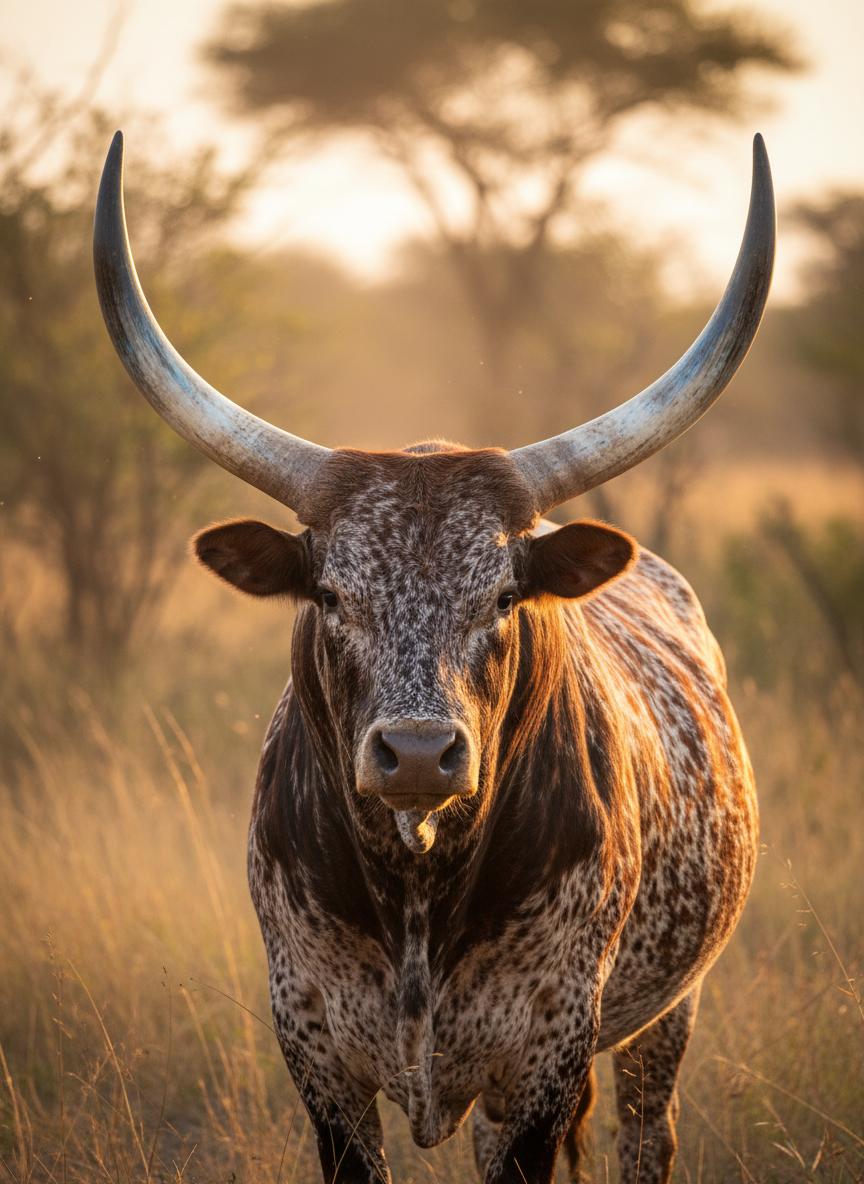
In Zimbabwe, Nguni cattle are found across all provinces, thriving in diverse conditions from the highveld to the lowveld. The breed is characterized by its multicoloured hides — with over 80 different colour patterns — and its distinctive lyre-shaped horns in cows and crescent-shaped horns in bulls.
Natural selection produced a breed that outperforms exotics where it matters most.
The most fertile beef breed in Southern Africa, with exceptional calving rates even under suboptimal conditions.
Calves are small at birth (avg. 22–26kg), with extremely rare calving difficulties thanks to the cow’s sloping rump conformation.
Thrives in extreme heat and cold, tolerates drought conditions, and requires minimal human intervention.
Natural immunity to ticks and tick-borne diseases, with low mortality rates and minimal veterinary costs.
Excellent browsing ability, consuming poor-quality pasture and converting it efficiently into quality beef.
Produces lean, well-marbled beef with even fat distribution, dressing out at 180–220kg on natural grazing.
Cows remain productive for 10+ calvings, with a productive lifespan of up to 20 years.
Produces the most kilograms of beef per hectare at the lowest cost of production.
Key benchmarks for registered Nguni cattle.
500–700kg, muscular with well-developed cervico-thoracic humps and crescent-shaped horns.
300–450kg, feminine with sleek lines, a sloping rump and distinctive lyre-shaped horns.
Birth weight avg. 22–26kg, weaning at ~175kg. Sleek, glossy, well-pigmented hides with 80+ colour patterns.